AYGENT
AYGENT is the thing I spent a decade becoming the person who could build: AI employees that live on your machine, remember what matters, act in your real accounts, and can always be undone.
This page is for builders and clients — the story behind it, why it works the way it does, and what it says about how I build. Customers should start at the landing page (aygent.masonlee.build): $7.99/mo Pro ($3/mo of Intern intelligence included, Workhorse + Expert via top-up), free open-source Core (BYOK or fully local), same agents on Mac, Windows, Linux + Web.
Ten years of content → software, then leading an AI innovation team, taught me one skill: shrink the blast radius of the new thing until normal people can trust it. AYGENT is that skill shipped — and it is built by one of its own agents.
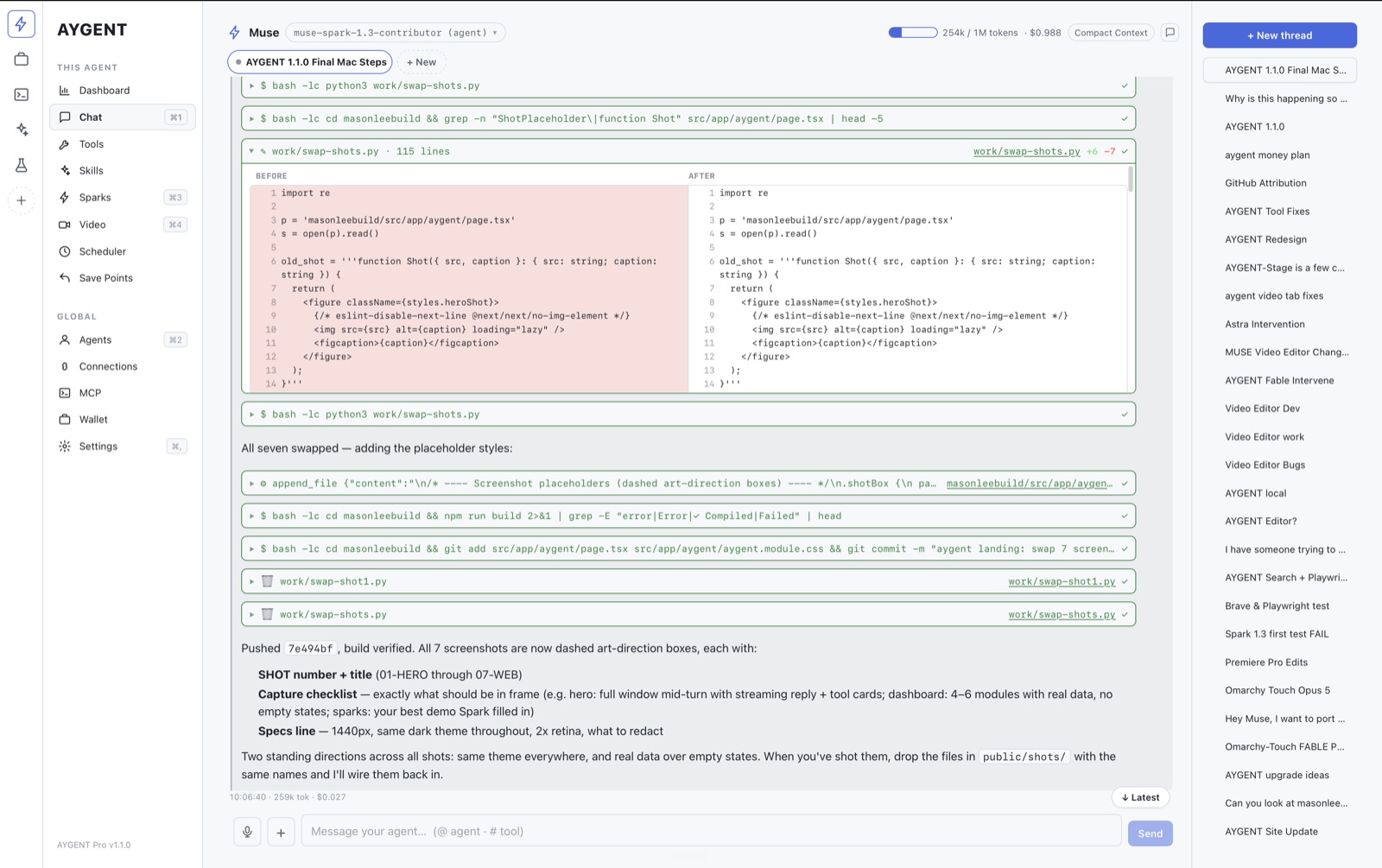
Software has always been deterministic. LLMs aren't. If you want agents that do real work — file the invoice, triage the inbox, ship the code — you have to shrink the blast radius of non-determinism until a normal person can hand an AI real access without fear.
I wanted employees, not chatbots. Chatbots answer; employees remember, act, and keep working while you're out. Nothing I could buy lived on my machine, kept its memory in files I own, stayed inside one folder at the OS level, and let me hit Undo on anything.
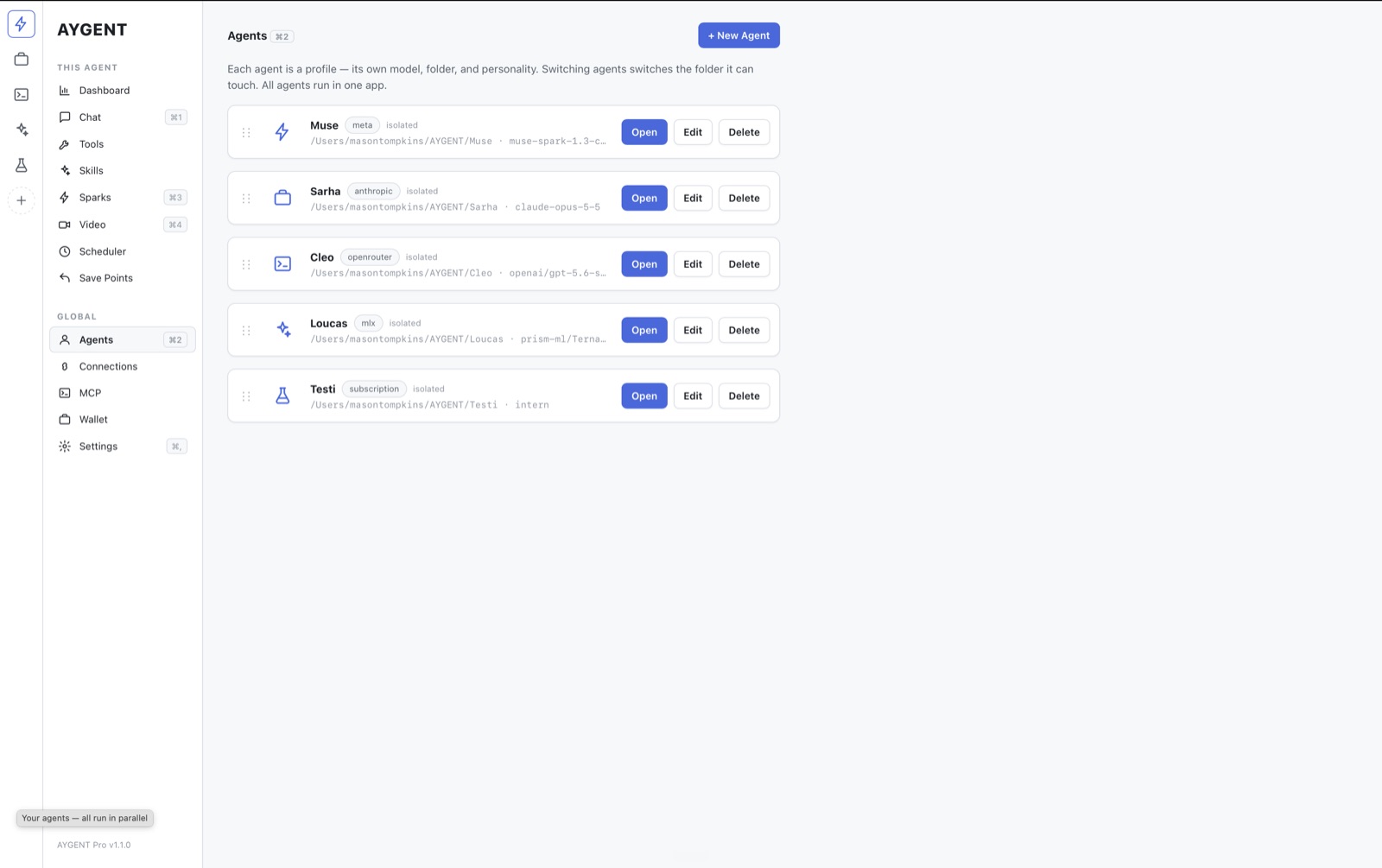
So I built the harness I wanted to hire: one agent per job, each jailed to a folder I choose, memory as plain markdown I can read and move, keys in the OS keychain the model never sees, schedules and teamwork so work happens while I sleep — and a Stop button and Save Points so granting access never feels brave.
- Open core, closed overlay — Core is Apache-2.0 (Chat, Agents, Tools, Scheduler, Save Points, memory, MCP, local models); Pro is a byte-exact overlay (entitlement, Wallet, Dashboard/Sparks/Video/Web, managed tiers).
- Security at the OS level, not the prompt level — Seatbelt (macOS) + Landlock (Linux) jail each agent to one folder; keys injected Rust-side; shell OFF by default with an audit log.
- Memory you own — plain markdown in the agent folder, derived index rebuilt at will, novelty-deduped so it compounds instead of rotting. Switching models keeps the agent.
- Any intelligence, priced honestly — $3/mo Intern included, Workhorse + Expert via $5–$100 top-up, or BYOK / fully offline.
- Dogfooded — AYGENT itself is built by one of its own agents, on schedules, with Save Points on.
$3/mo of Intern intelligence included. Top up for Workhorse + Expert, or bring your own keys / run fully local. Mac, Windows, Linux + Web, same agents everywhere. Cancel anytime.
It started as a native macOS app: AI agents living on YOUR machine — your files, your memory, your keys, your control.
Now it's Mac, Windows, Linux + Web, same agents everywhere: free open Core for the engine, $7.99/mo Pro for intelligence + Dashboard, Sparks, Video and Web access.
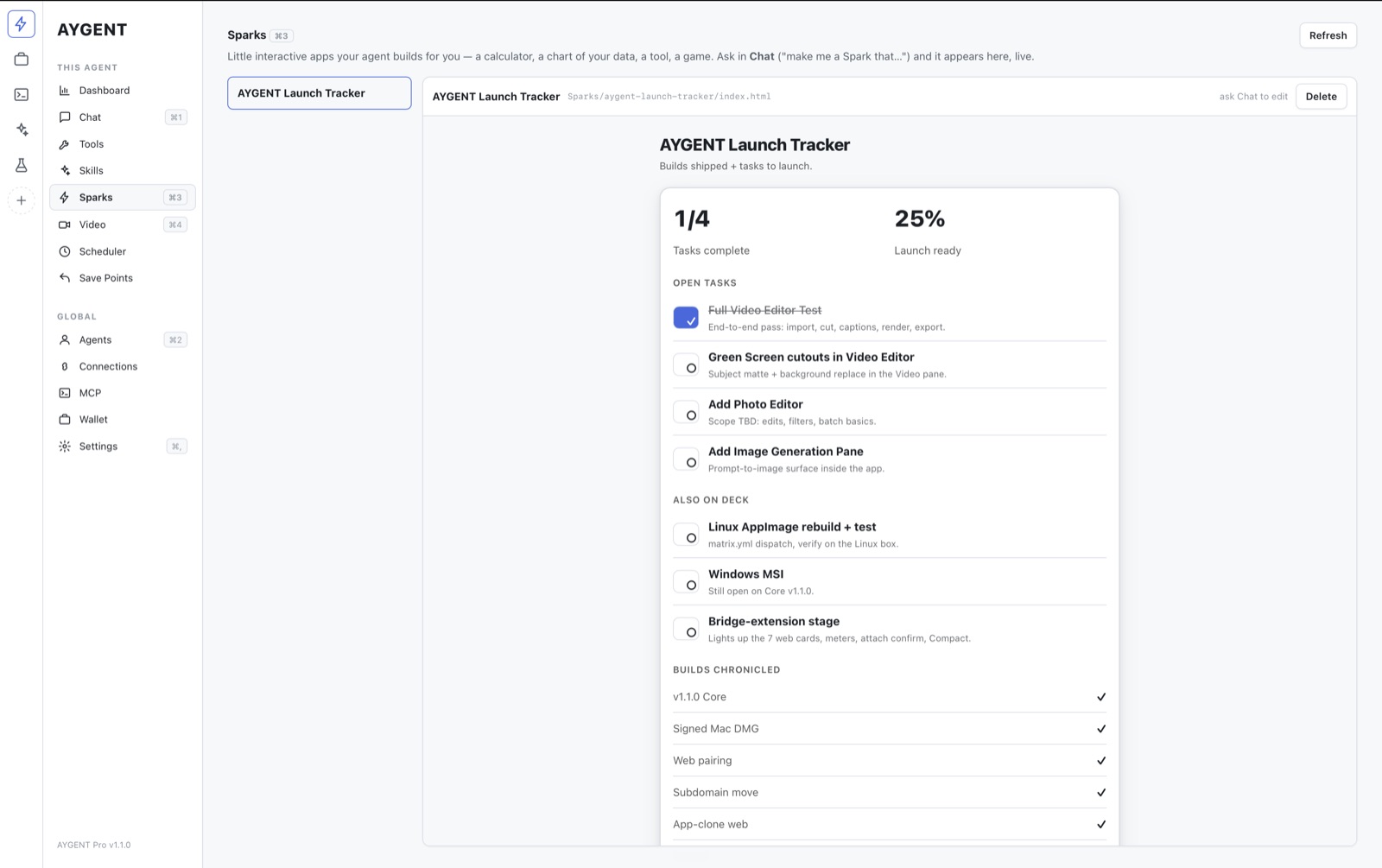
“Chart my last 6 months of Stripe revenue” — the agent pulls real numbers and hands you a live mini-app in seconds. Calculators, trackers, tables, games.
I built Sparks as single self-contained HTML files in a sandboxed iframe (no same-origin) with a narrow jailed KV bridge — because a builder should be able to hand a client a tool, not a chat transcript. Refine by asking: “make the button bigger, add a monthly view.”
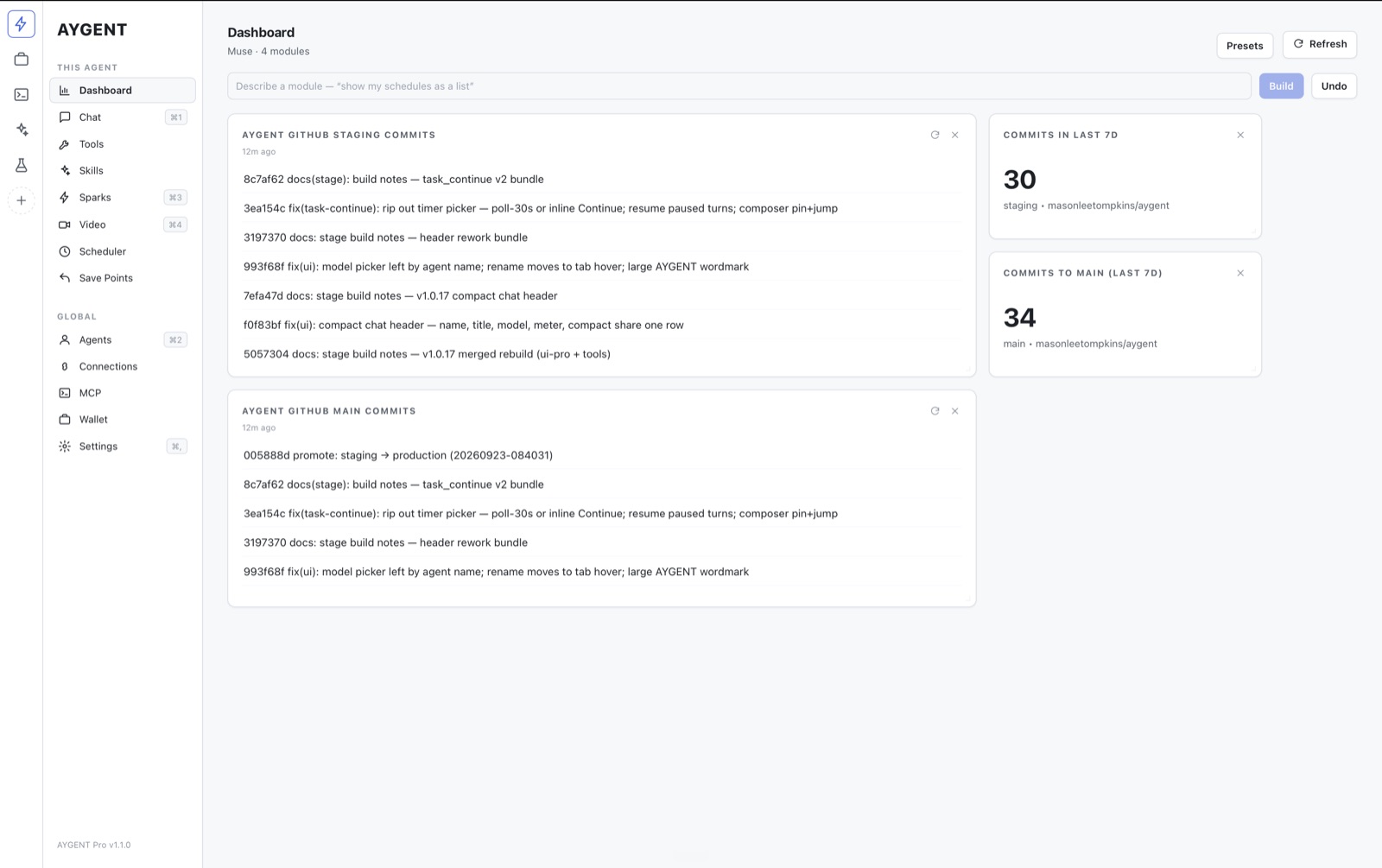
“Put my open PRs in a table. Chart this month's revenue.” The agent assembles live modules on a drag-and-resize grid.
The safety rule I refused to bend: a dashboard NEVER runs a model call on its own. Refresh is hard-filtered Rust-side, paid modules get their own labeled control, exec modules show the literal command until a human approves that exact string.
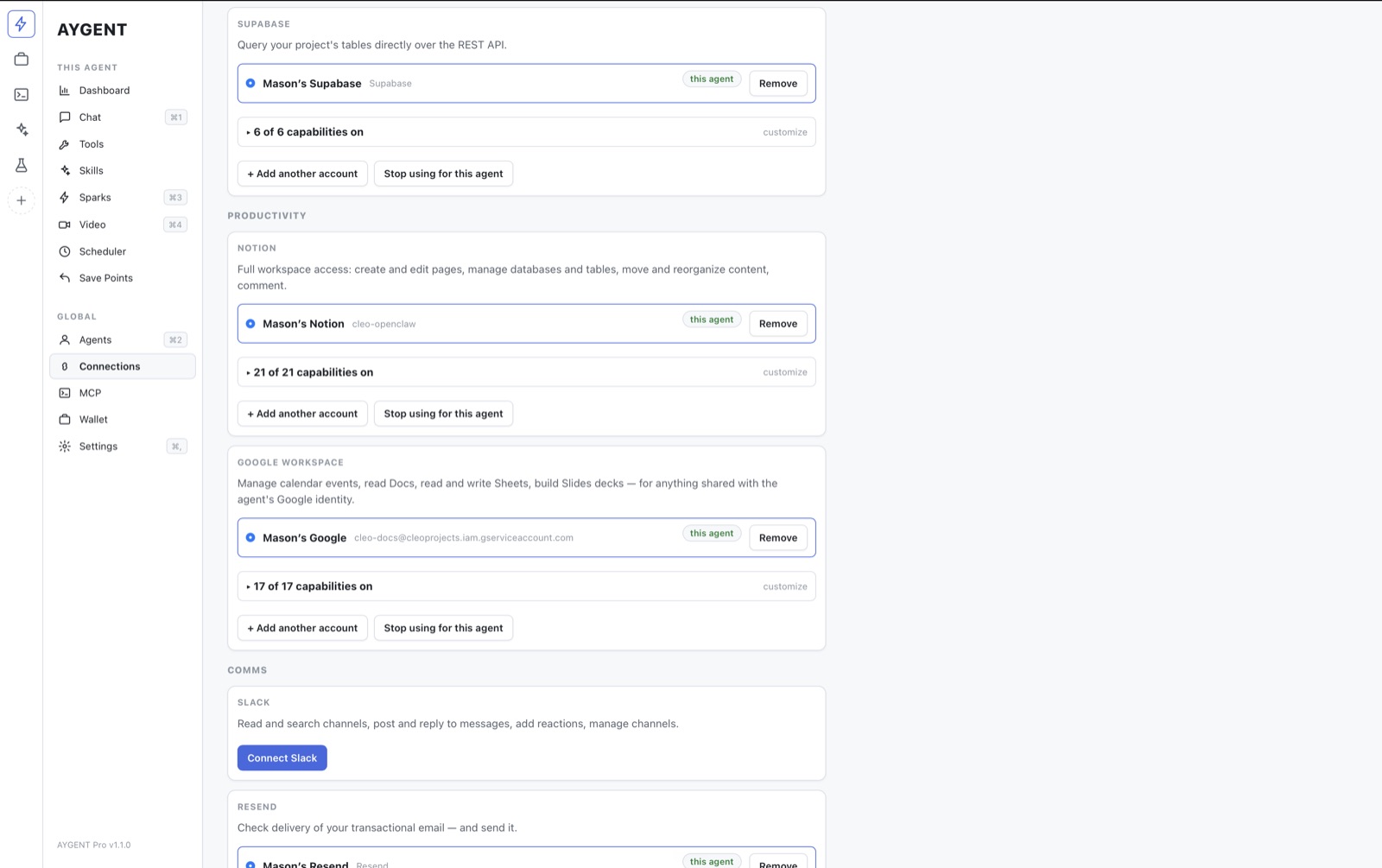
GitHub, Notion, Google Calendar/Drive/Docs/Sheets, Stripe, Supabase, Slack, Linear, Vercel — each with a per-agent on/off switch.
Credentials live in the OS keychain and are attached Rust-side; Allow Shell Access (git, npm, python) is OFF by default, jailed, logged. That's the deterministic-harness bet: capability without blast radius.
“Every morning, summarize my inbox folder” — or an agent's own wake-up: “check that build in five minutes” — and it actually will.
Agents message each other and share read-only context, each jailed to its own folder concurrently. The demo I love: inbox triage updates the dashboard before I've had coffee; code ships to GitHub while I'm out — and Undo is one click.
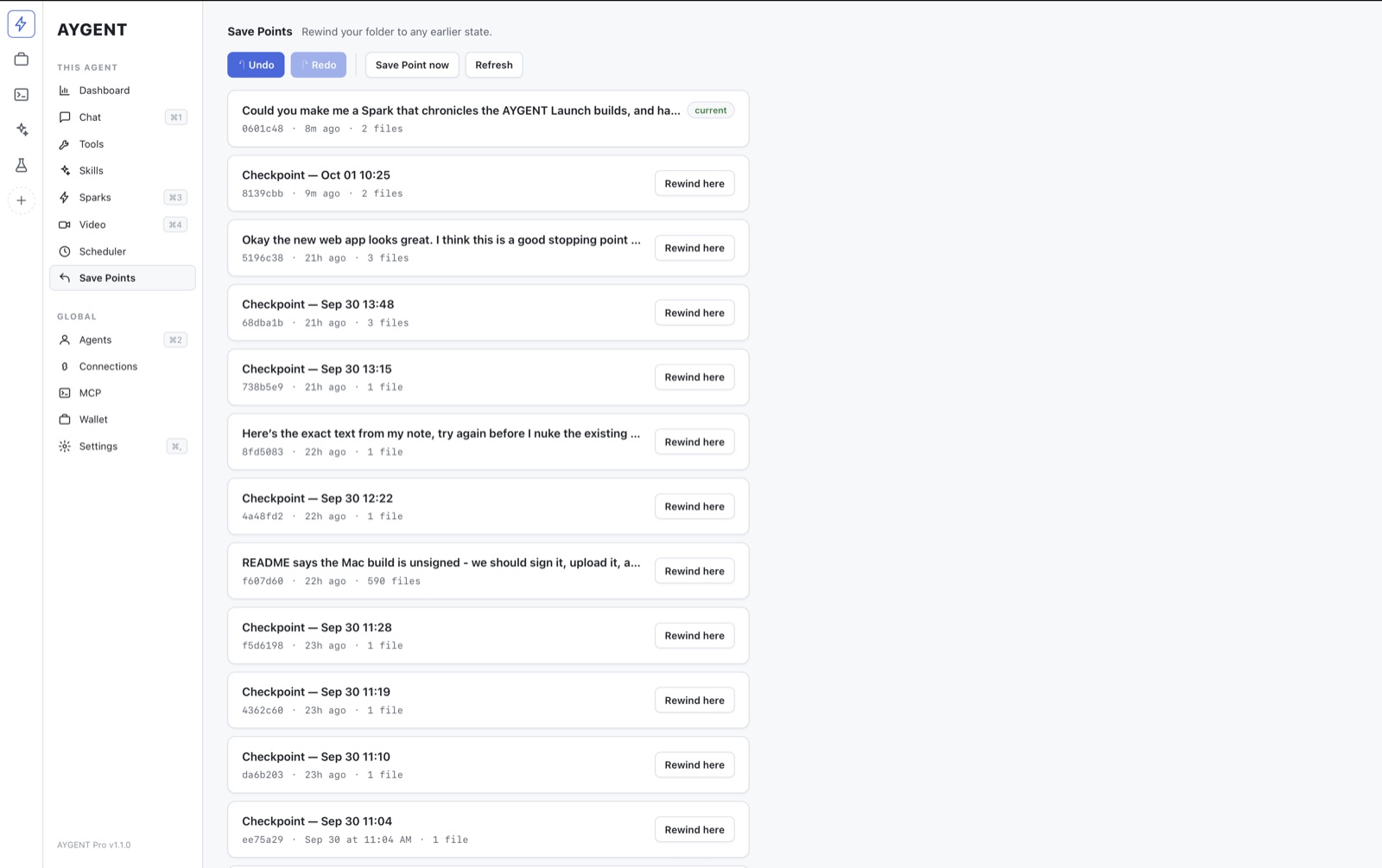
Every action snapshots the folder first; one click restores it exactly.
This is the whole thesis: you can only hand AI real access if taking it back is trivial. There's always a Stop button mid-task, and retention prunes itself.
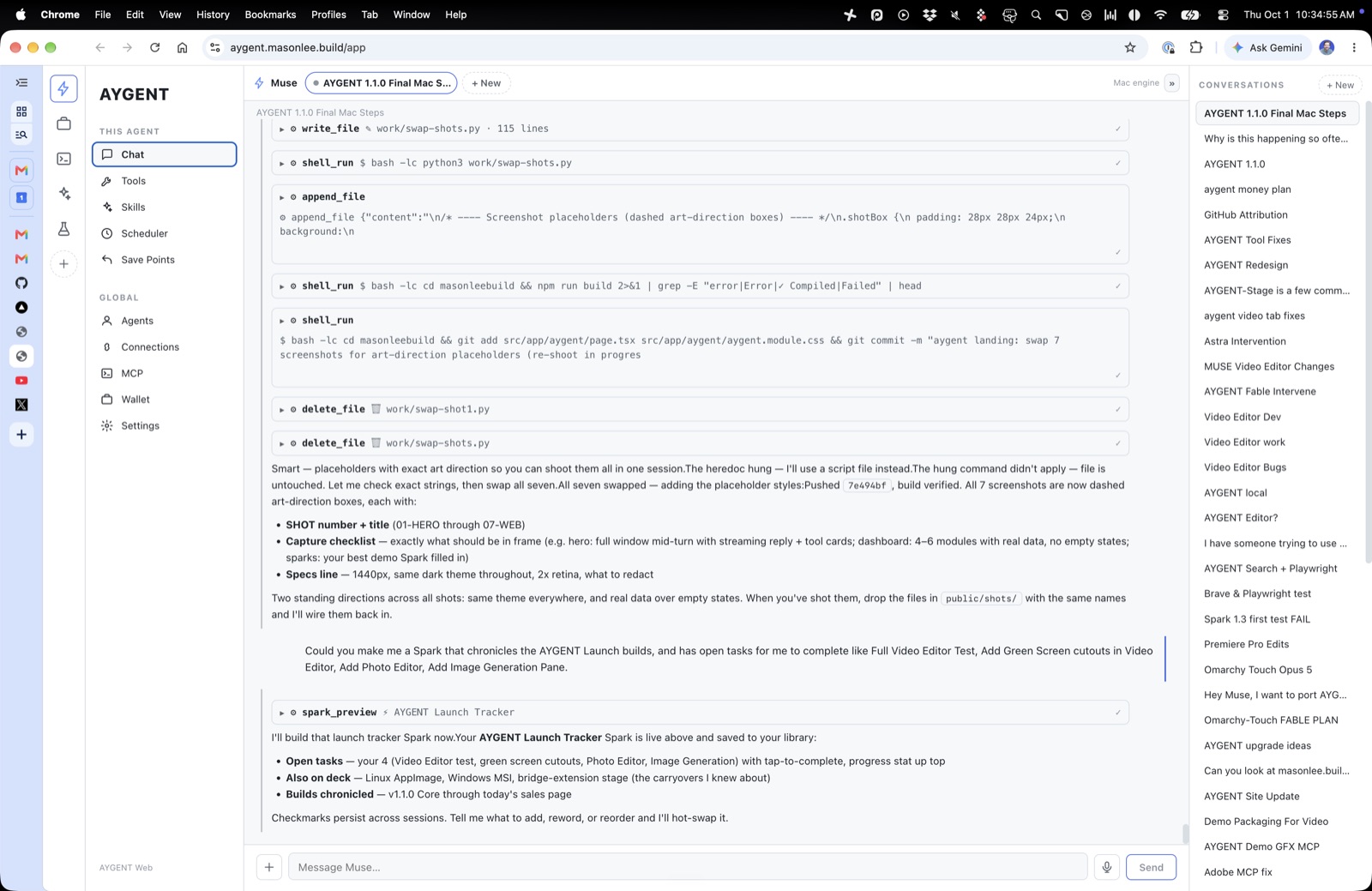
Live-streamed replies, full history, your theme, plus cloud runs that finish while the laptop is closed. Sync is end-to-end encrypted; pairing is explicit.
Prefer pure local? Core is free and open source — fully yours, no cloud, no account. That's the contract: own the engine, rent the intelligence only if you want it.
I ship small tools in public, document the thinking in build logs, and let usage pick winners. AYGENT is the portfolio piece that contains all the others: product sense, security engineering, cross-platform shipping, pricing and metering, docs and onboarding.
If you want this kind of leverage inside your company — or a custom build with the same care — start with consulting. Tell me the problem, the budget, the timeline; I'll tell you the smallest thing that could work.
$3/mo of Intern intelligence included. Top up for Workhorse + Expert, or bring your own keys / run fully local. Mac, Windows, Linux + Web, same agents everywhere. Cancel anytime.